 oschambers-admin
 The rise of modern technology has transformed how commercial activities are conducted across the globe. In Nigeria, technological advancements and the increasing use of social media platforms have significantly shaped consumer transactions. Many providers of goods and services now showcase and sell their products online through platforms such as Instagram, TikTok, and X (formerly Twitter), benefiting from lower start-up costs, reduced marketing expenditure, and seamless payment systems.However, alongside these advantages has emerged a worrying trend: many online vendors adopt a strict “No Refund” policy, preventing consumers from returning goods or recovering payments even where products are defective or unfit for purpose. This practice often leaves consumers stuck with substandard items and raises important questions about legality under Nigerian law.Consumer Protection Under Nigerian Law Consumer protection in Nigeria is principally regulated by the Federal Competition and Consumer Protection Act (FCCPA) 2018.The law is premised on the understanding that consumers are typically the weaker party in commercial transactions and therefore deserve protection from unfair practices.Under the FCCPA, consumers enjoy several enforceable rights, including the:Right to information in plain and understandable language right to disclosure of the price of goods and Services right to adequate and accurate product description right to disclosure where goods are second-hand or Reconditioned right to cancel reservations, bookings, or advance orders in certain Circumstances these rights reflect the commitment of Nigerian law to fairness, transparency, and accountability in consumer transactions.
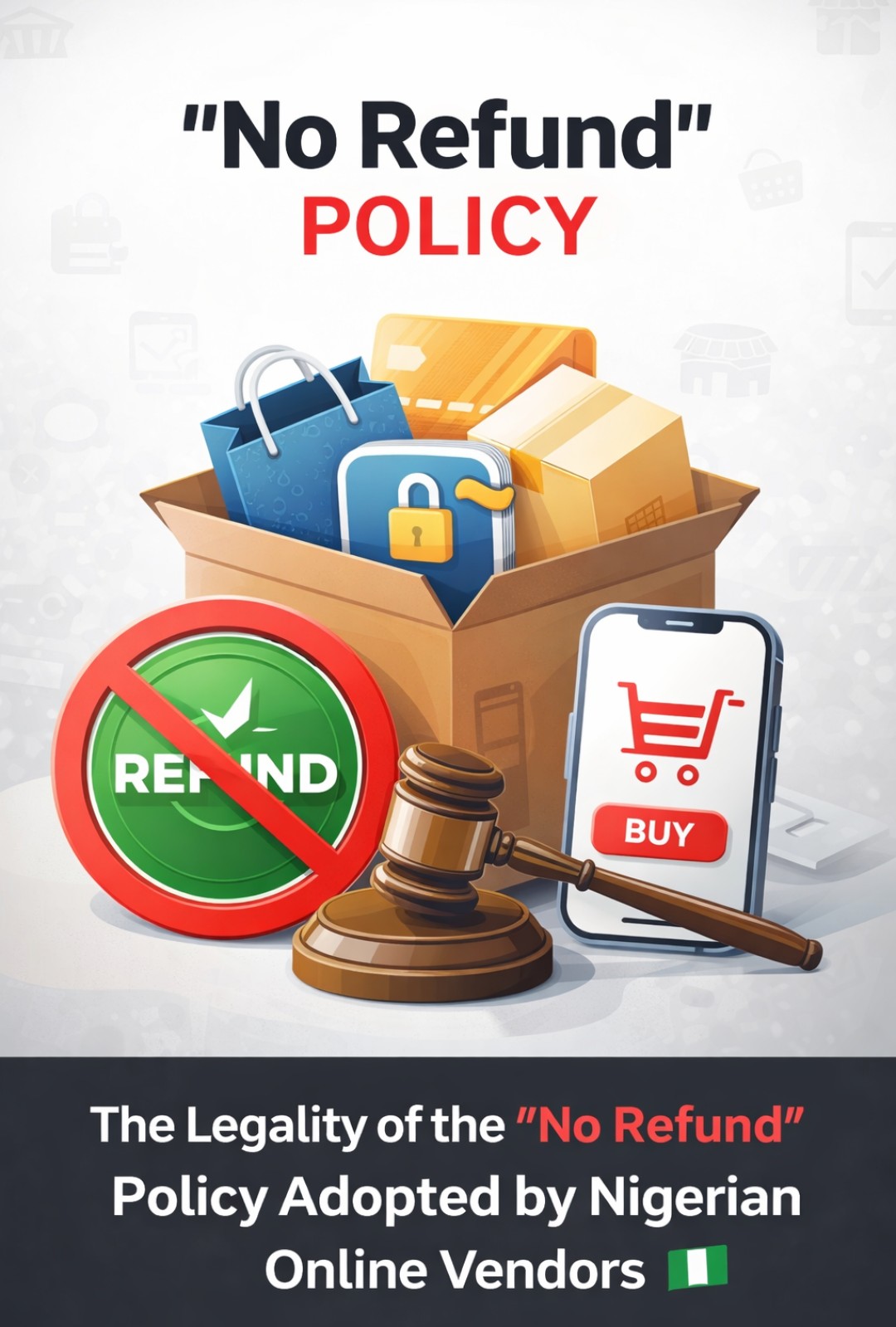
What the
eWhat the FCCPA Says about the No-refund Policy
Section 122 of the FCCPA directly addresses circumstances under which consumers may return goods and obtain refunds. A consumer is legally entitled to return goods where:Goods are defective or unfit for a communicated purpose
If a consumer informs the seller of a particular purpose for purchasing a product and the product fails to meet that purpose, the consumer has the right to return it.The consumer did not have an opportunity to examine the goods before delivery
Where inspection was not possible prior to purchase — a common feature of online transactions. The consumer may reject the goods within a reasonable time if they do not correspond with the description, quality, or agreed standard.
Based on these provisions, a blanket “No Refund” policy that denies consumers the ability to return defective or misrepresented goods may be deemed unfair, unconscionable, and contrary to the FCCPA. Vendors adopting such policies risk being held in breach of the law.Remedies Available to Aggrieved Consumers.
Consumers who feel cheated or unfairly treated are not without recourse. Available options include:
Lodging a complaint directly with the vendor
filing a complaint with the Federal Competition and Consumer Protection Commission (FCCPC)initiating legal action in court
Where a vendor is found to have violated provisions of the FCCPA, potential consequences include:
monetary fines
award of damages to the consumer
closure of business premises
reputational damage and loss of customer trust
When a “No Refund” Policy May Be Justified
While generally disfavored, there are limited circumstances where a “No Refund” policy may be reasonable, such as:where goods are custom-made for a particular consumer and cannot reasonably be resold
where products purchased are digital goods and usage cannot easily be verifiewhere the items are perishable or time-sensitive
where the product has been used or altered contrary to instructions.
Even in these situations, the policy must be clearly communicated and must not conflict with statutory consumer rights.
Conclusion
The law in Nigeria strikes a balance between commercial freedom and consumer protection. While online commerce offers undeniable convenience and profit opportunities, vendors must conduct business within the boundaries of the FCCPA 2018.A rigid “No Refund” policy that disregards consumers’ statutory rights is likely unlawful and exposes vendors to legal sanctions. Consumers, on their part, are encouraged to be aware of their rights and to seek appropriate redress where necessary.For further legal guidance on consumer protection or online commercial practices, Oluwadamilola Sodipo Chambers & Co. remains available to assist.